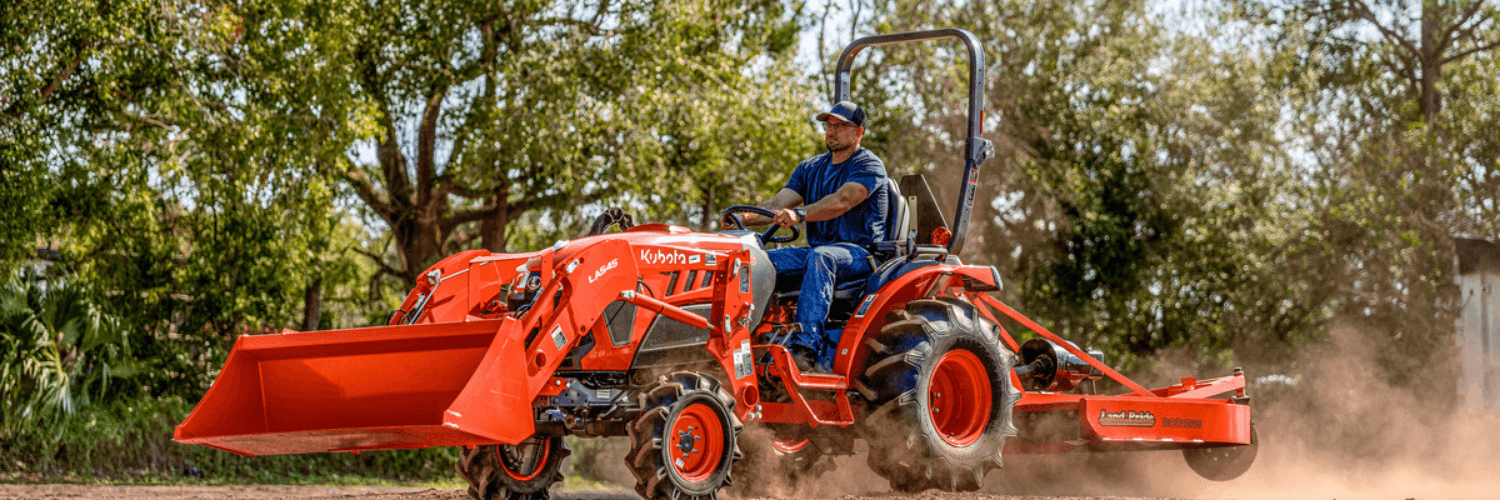
Best Kubota Tractors for 1 to 10 Acre Properties: What Size Tractor Fits 5 Acres, 10 Acres, and Everything Between
4/4/2026



Shopping for the best tractor for 5 acres or the best tractor for 10 acres usually starts the same way, a few tabs open, a couple model names, and a nagging worry that one wrong choice turns into years of regret. We see it every week in Northeast and Eastern Ohio. Folks are not scared of work, they are scared of downtime, wasted money, and buying a machine that is either too small to handle the “real” jobs or too big to maneuver around buildings, trees, and fences.
This guide breaks down the Kubota BX, B, and LX series in plain language, with a sizing method we use in the dealership. It is built for landowners and property maintenance crews who want straight answers and a tractor that gets the job done without drama.
On paper, a smaller price tag looks good. In real life, one breakdown during mowing season or a snow event can wreck a schedule. If you run a landscaping or property maintenance outfit, that turns into missed jobs and unhappy customers. If you are a landowner, it turns into weekends burned and projects that never get finished.
The “best” tractor is the one that stays running, has local parts support, and is sized so you are not abusing it every time you hook up an implement.
Buying too small usually shows up as slow work, spinning tires, or a loader that cannot safely handle what you asked it to lift. Buying too big shows up as turf damage, storage headaches, and a machine that feels clumsy in tight areas. Either way, you end up spending money twice.
Acreage tells us how much ground you have. It does not tell us what you are doing on it. A flat 5 acres of lawn is a different world than 5 acres with a long gravel drive, a hillside, and a pile of firewood.
Here is the no-nonsense rule:
That is a starting point, not a final answer.
If you want a kubota tractor for small property work where maneuverability matters, the BX series is a strong place to start. It is a sub-compact tractor, which means it is built to be easy to run, easy to park, and friendly in tighter areas.
A BX can do a lot, but it is still a smaller machine. If your “once in a while” job is actually every weekend, it is usually time to look at a B or LX.
For a lot of folks searching best compact tractor for 5 acres, the answer ends up in the Kubota B series. It has more ground clearance, more weight, and more implement options than a sub-compact, while still staying manageable around a home or small jobsite.
Five acres is the range where chores start stacking up. You might mow, move snow, maintain a drive, and haul materials for projects. The B series tends to hit the balance between:
If you want compact size but you are working the machine hard, the LX series is worth a serious look. Many buyers land here after owning a smaller tractor and realizing they want more stability, comfort, and capacity.
If your search is best tractor for 10 acres, the right answer often comes down to terrain and implement size. On rolling ground, or if you plan to run heavier rear implements, the LX gives you more of what matters for control and efficiency: weight, stability, and the ability to keep moving without feeling like you are asking too much from the tractor.
Mowing is about productivity and finish quality. If the property is mostly maintained grass with obstacles, BX with a mower deck can be a great fit. If you have mixed mowing and rougher areas, B or LX with a rear mower or rotary cutter is often the better long-term play.
Gravel driveways and winter are where a lot of small-tractor setups get exposed. If you plan to do regular driveway work, prioritize weight and traction over brochure horsepower.
Loader work is where “bigger than you think” shows up. The safest loader setup is not just lift capacity, it is the whole package: tractor weight, wheelbase, ballast, tires, and what you lift.
If you are moving stone, green logs, or handling pallets, a B series or LX is usually where we start the conversation.
Brush and cleanup work brings hidden surprises, stumps, uneven ground, and the need for clearance. If you are cutting trails or reclaiming edges, lean toward B or LX so you have the clearance and stability to work without getting beat up.
Horsepower sells tractors. Weight does the work. If you are pulling a box blade, running a rotary cutter, or using a loader, traction and stability will matter more than a couple extra horsepower points.
Implements are not an afterthought, they are the whole reason the tractor earns its keep. Plan where they will live, how you will hook them up, and whether your trailer and truck are ready for the full setup.
A loader without proper ballast is like a pickup without rear tires. It might move, but it is not happy about it. Proper ballast improves traction, stability, and safety. It also protects your equipment from the kind of strain that leads to early wear.
This one is plain. A tractor is only as useful as the support behind it. Parts availability, service capacity, and clear communication are what keep downtime from turning into a season-long problem.
At Unkefer Sales, we listen first and sell second. That means we talk through your land, your jobs, and your timeline, then match the tractor and implements to what you are actually doing. We are a full-service Kubota dealership in Minerva, Ohio, with a parts department and service shop built around real-world urgency. We also offer delivery and on-site service, because towing a disabled tractor across counties is nobody’s idea of a good time.
We also build hydraulic hoses in-house, which can save days when a simple hose failure would otherwise park the machine.
If you are deciding between a Kubota BX series tractor, a Kubota B series tractor, or a Kubota LX series tractor, we will help you narrow it down quickly and honestly. Bring a few photos of your property, your driveway, and the jobs you want to tackle. We will size it right, line up the right implements, and make sure you have a plan for maintenance and parts so the tractor stays working. Stop by Unkefer Sales in Minerva or give us a call. Straight answers, no runaround.
If you have any questions or need more information, we’re here to help. Contact us at sales@unkefersales.com, or join the Unkefer community here to get the latest insights, tips, and updates.