Common Tractor Maintenance Mistakes to Avoid (and the Simple Fixes That Save Your Week)
4/4/2026
Most tractor problems do not start with a bang. They start with a small skip, a shortcut, or a “we’ll get to it after this job.” Then the weather turns, the deadline tightens, and that little skip turns into downtime.
We see it every week in the shop at Unkefer Sales in Minerva, Ohio. Contractors, municipalities, farmers, and property crews all want the same thing: keep the machine working, keep the schedule intact, keep your name solid with your customers.
This tractor maintenance guide breaks down the most common tractor maintenance mistakes to avoid, plus plain fixes you can actually stick with.
Downtime is rarely just the repair bill. It is the lost day, the reschedule, the crew standing around, and the phone call you do not want to make.
Common patterns we hear:
Hours are your maintenance clock. Ignore them and you end up guessing, and guessing is expensive.
Use the manufacturer schedule as the baseline, then make it jobsite-proof:
If the machine runs dust, heat, short trips, or heavy hydraulic load, shorten the intervals. The manual is written for “normal.” Jobsites are rarely normal.
Kubota builds a solid maintenance schedule into the operator’s manual, and it is the right starting point. If you run a compact tractor in mowing dust, demo debris, or long loader days, plan on servicing filters and cooling systems sooner. That is not overkill, it is protection.
Grease is cheap. Pins and bushings are not. Loader pins, backhoe pivots, mower spindles, and driveline joints wear quietly until they do not.
Fluids are the machine’s lifeblood. Low level, wrong type, or overdue service usually shows up as heat, noise, weak performance, or slow hydraulics.
Short-run machines still rack up wear. Condensation builds, fuel can dilute oil, and the oil never fully heats to cook moisture off. If your tractor does a lot of short moves around a jobsite or property, keep oil changes on the conservative side.
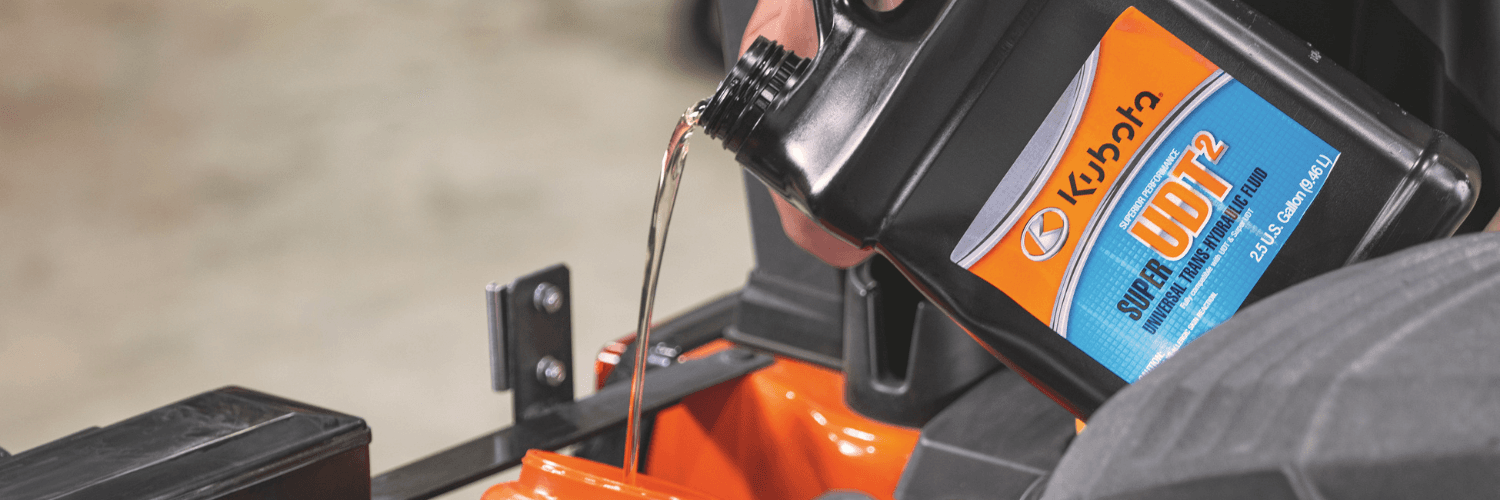
Hydraulic and hydrostatic transmissions (HST) live on clean fluid. Dirty fluid causes heat and wear that is hard to notice until performance drops.
Tractor care tips that help here:
Cooling systems fail slowly. A low level, a clogged screen, or weak coolant protection can lead to overheating. Overheating can warp heads, cook hoses, and shorten engine life in a hurry.
If it starts, it is easy to assume it is fine. Filters do not usually stop a machine instantly. They choke it a little at a time, and that is why they get ignored.
Dusty mowing, landscaping, and construction sites load air filters fast. Restricted air flow means less power and more smoke, and in the worst cases it can lead to engine damage.
Modern diesel fuel systems like clean fuel. Water in fuel causes hard starts, poor running, and corrosion.
Batteries do not usually die at 2 p.m. on a slow day. They die at 6 a.m. when you have concrete coming, mulch scheduled, or snow on the way.
Overheating is a warning, not a phase. If the temp climbs, stop and find the cause. Running hot even once can shorten engine life.
Compact tractors and skid steers working in grass, seed heads, and debris can pack a radiator screen tight.
How you shut down matters. Moisture and debris invite corrosion, stuck linkages, and chewed wiring.
Ohio winters bring freeze and thaw. That means condensation, corrosion, and fuel issues if you let it sit.
Fluids are not all the same. Wrong viscosity or wrong additive package can cause noise, heat, or poor hydraulic response.
Some universal tractor fluids work fine in some applications. Others do not match what your system needs. If the label is vague, that is your sign to slow down.
For Kubota owners, match the spec the manual calls for. If you are unsure, call the parts counter with your model and serial range. We would rather answer a quick question than sell you a second set of fluid later.
Wear parts are supposed to wear. The mistake is running them past the point where they start taking other parts with them.
These checks catch most of the issues that turn into a lost day.
Some issues are worth stopping for, even if you are in the middle of a job. Continuing can turn a small fix into a bigger repair and more downtime.
We believe in straight answers. If you call in with a problem, you deserve clear expectations on parts availability, service timeline, and the next step that makes sense.
Big dealers can have big buildings. That does not always help when you need a part today and a straight timeline.
At Unkefer Sales, our goal is simple: keep you working.
Neighbor-to-neighbor tip: keep a maintenance log in the cab or on your phone. Hours, dates, what was serviced, and what you noticed. That little habit saves a lot of head scratching later.