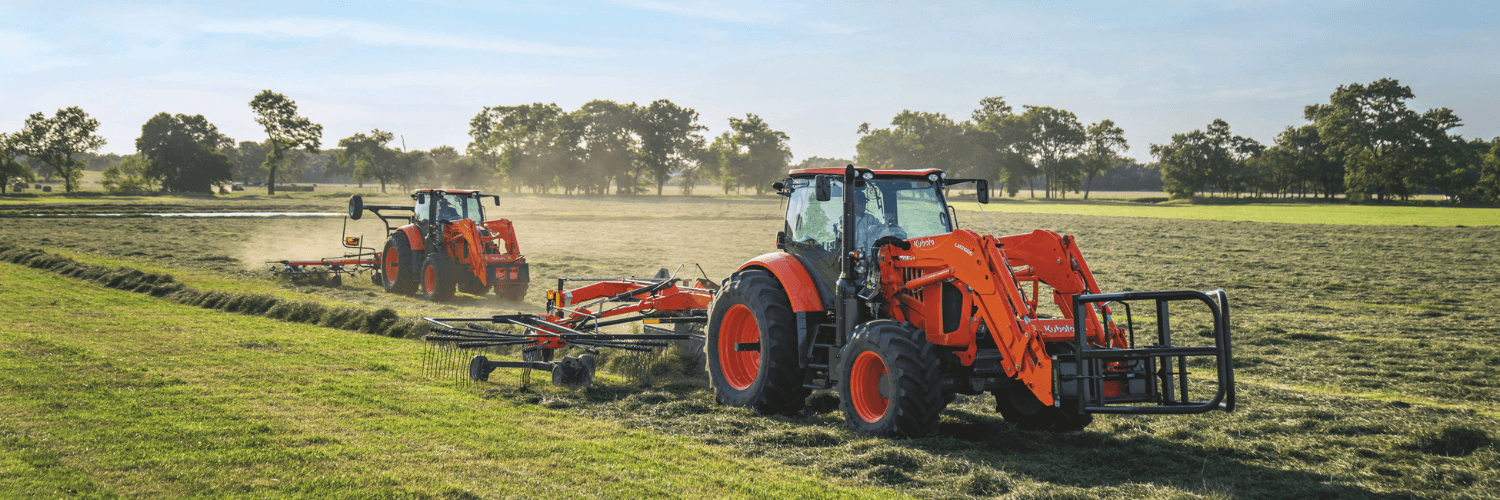


Kubota Equipment That Helps Reduce Labor on the Farm
4/4/2026

Farm labor is expensive, hard to find, and usually booked solid already (because it is you, your family, or one good hand who cannot be in three places at once).
The good news: you do not need a huge fleet to cut hours out of the week. The right Kubota farm equipment and a few no-nonsense implements can turn “all day” chores into “before lunch” work, without beating up your crew or your schedule.
We are Unkefer Sales in Minerva, Ohio. We sell Kubota equipment, service it, stock the parts, and we spend a lot of time helping folks avoid the two big killers of efficiency: buying the wrong machine and losing time to downtime.
Most farms do not lose time on the big, obvious jobs. Time leaks out on the repeat stuff:
That is why labor saving farm equipment usually looks boring on paper. It is not flashy, it just removes steps.
Farm equipment that reduces labor does three things:
We see it every year. Someone buys too small to “save money,” then spends the next five years fighting traction, lift capacity, and stability. Or they buy bigger than they need, and now they cannot fit where the work actually happens.
Here is a plain test we use when talking through Kubota tractors for farming:
If your goal is best farm equipment for efficiency, focus on the specs that directly remove labor:
Horsepower matters, but it is not the only lever. A stable, well-matched setup often beats “more HP” that cannot put power to the ground.
Below are the pieces we see making the biggest difference for farms and small acreage owners in our part of Ohio. Think of this as a practical menu of Kubota agricultural equipment and attachments, not a one-size-fits-all list.
If you buy one thing to reduce farm labor, start here. A loader turns one tractor into a chore machine.
Make sure you have a quick-attach style coupler. Swapping tools quickly is what keeps a loader from becoming “that one bucket we never change.”
Forks are one of the most-used Kubota tractor implements we sell because they are simple and they save backs.
If you want a grapple or any attachment that needs hydraulic open and close, you need 3rd function on the loader. It is one of those options that feels like overkill until you use it every week.
A grapple is the definition of equipment that reduces farm labor. It lets one operator pick, stack, and haul brush and debris without getting off the seat every two minutes.
Mowing is a time sink, and it comes back every season. The right cutter helps you finish quicker and avoid rework.
We match mower width to tractor stability and PTO power so you are not bogging down or skating around on hills.
For homesteads and mixed-use farms that keep areas looking sharp, a finish mower can cut down trim work and cleanup time by leaving a cleaner cut the first pass.
If you maintain gravel drives, farm lanes, or parking areas, a land plane or box blade can save hours compared to raking, shoveling, and re-spreading.
Fencing by hand is honest work. It is also slow work. A tractor-mounted auger makes holes consistent, speeds up setting posts, and cuts down fatigue so you stay accurate later in the day.
If you handle round bales, choose a spear setup that matches your bale size and tractor capacity. The labor savings are obvious, but the real win is safety and control.
Winter does not care about your schedule. A rear blade, front snow blade, or snow blower setup can keep drives open without burning half a day every time it snows.
People ask about Kubota equipment for small farms all the time. The answer is usually a smart tractor, a loader, and a short list of attachments that match how chores really happen.
Even the best equipment for efficiency is not efficient when it is parked. Downtime hits cash flow, schedules, and your reputation, especially when you are trying to keep animals fed or jobs moving.
Common mismatch problems we help prevent:
That is why we are big on fit-for-job talk. It is not sales talk, it is downtime prevention.
Preventive maintenance is not glamorous. It is cheaper than losing a week in peak season.
A blown hose stops everything. One of the practical ways we help customers protect uptime is in-house hydraulic hose building. In many cases, that means you are back in motion faster than waiting on a special order.
If you are shopping Kubota equipment for farms, the machine is only half the decision. The support behind it matters just as much.
Straight answers beat pretty promises every time.
We keep it simple. We listen first, then we match equipment.
Our goal is a setup that saves labor now and still makes sense five years from now.
If you are deciding between two sizes, or you are not sure a grapple, mower, or loader capacity is enough, a walk-around can prevent an expensive mistake. Bring a few photos of your tight spots, your hills, and the stuff you lift. We will talk it through like neighbors.
If you have any questions or need more information, we’re here to help. Contact us at sales@unkefersales.com, or join the Unkefer community here to get the latest insights, tips, and updates.